
Chroma: Vector DB for AI Development
TechLatest · Software Development
Certification per Microsoft Marketplace.
Evidence tier Source Confirmed · 9 captures on record
What the publisher says
As described on Microsoft Marketplace.
Important: For step by step guide on how to setup this vm , please refer to our Getting Started guide
This virtual machine offers a pre-configured environment combining ChromaDB, an open-source embedding database designed for AI and LLM applications, with JupyterHub for collaborative notebook-based development.
Show the rest of the publisher’s description (17 more lines)
It provides an easy way to explore retrieval-augmented generation (RAG), vector search, and semantic indexing workflows.
Whether you're experimenting with embeddings, evaluating model retrieval quality, or building intelligent applications that combine search and generation, this setup gives you everything you need out of the box.
Chroma is a modern open-source vector database built for machine learning and LLM-based workflows.
It allows developers to:
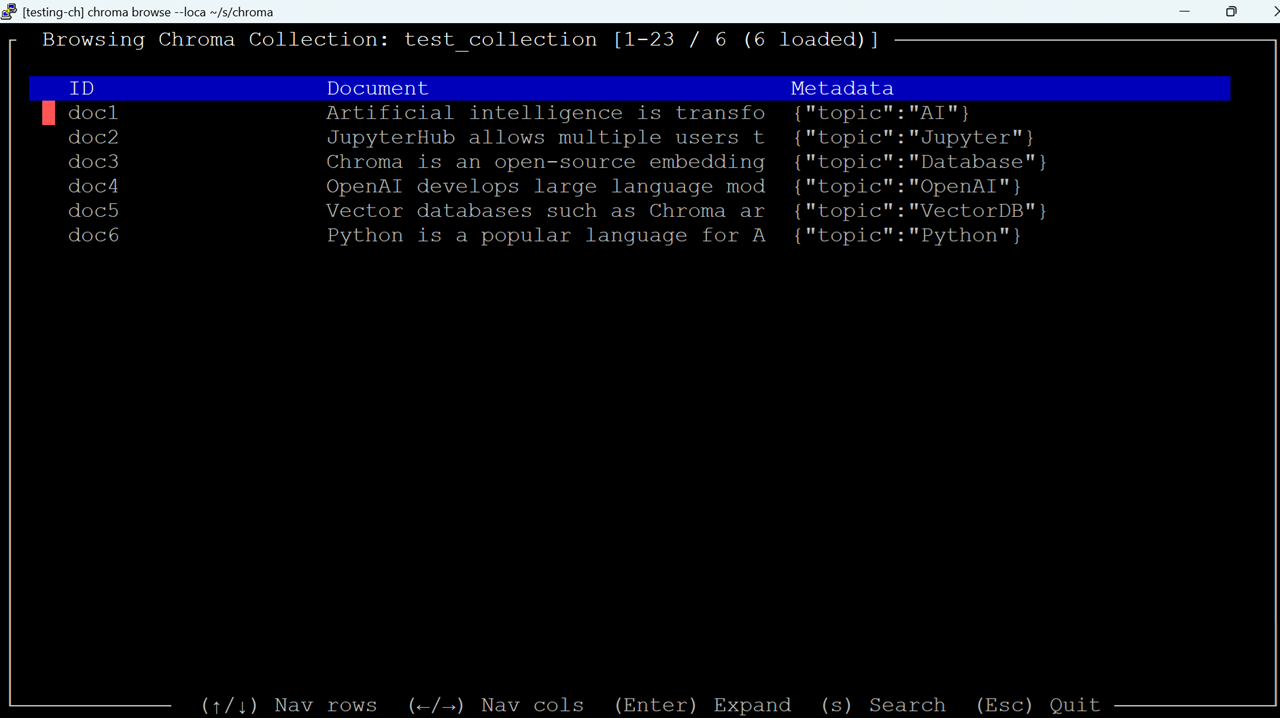
- Store, index, and query text or multimodal embeddings
- Build retrieval-augmented generation (RAG) systems
- Run semantic similarity search across documents or datasets
- Integrate seamlessly with frameworks like LangChain, LlamaIndex, and OpenAI APIs
- Persist data locally or in client-server mode, with lightweight dependencies
ChromaDB’s in-memory and persistent modes make it ideal for research, prototyping, or embedding evaluation without heavy infrastructure.
JupyterHub Integration
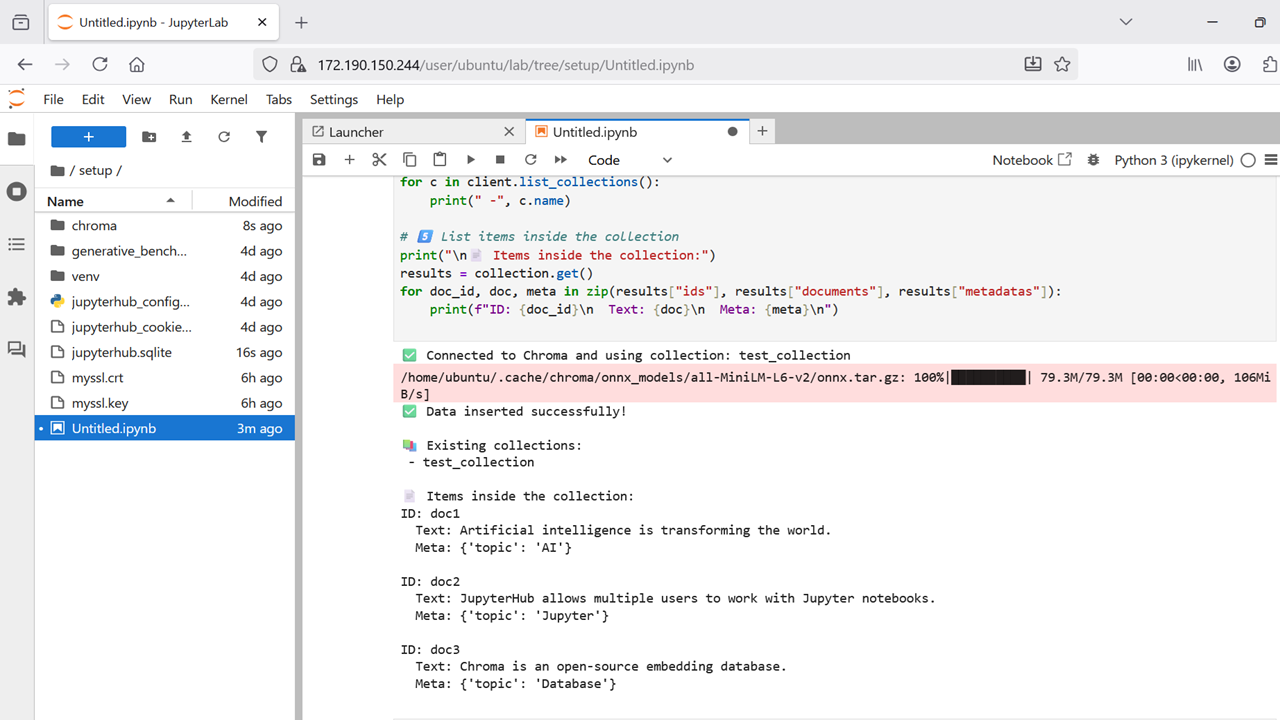
This environment comes with JupyterHub, a collaborative, web-based notebook server ideal for research, development, and teaching.
Users can create and manage notebooks directly in the browser, write Python code, visualize data, and run experiments—all in an isolated environment tied to the virtual machine.
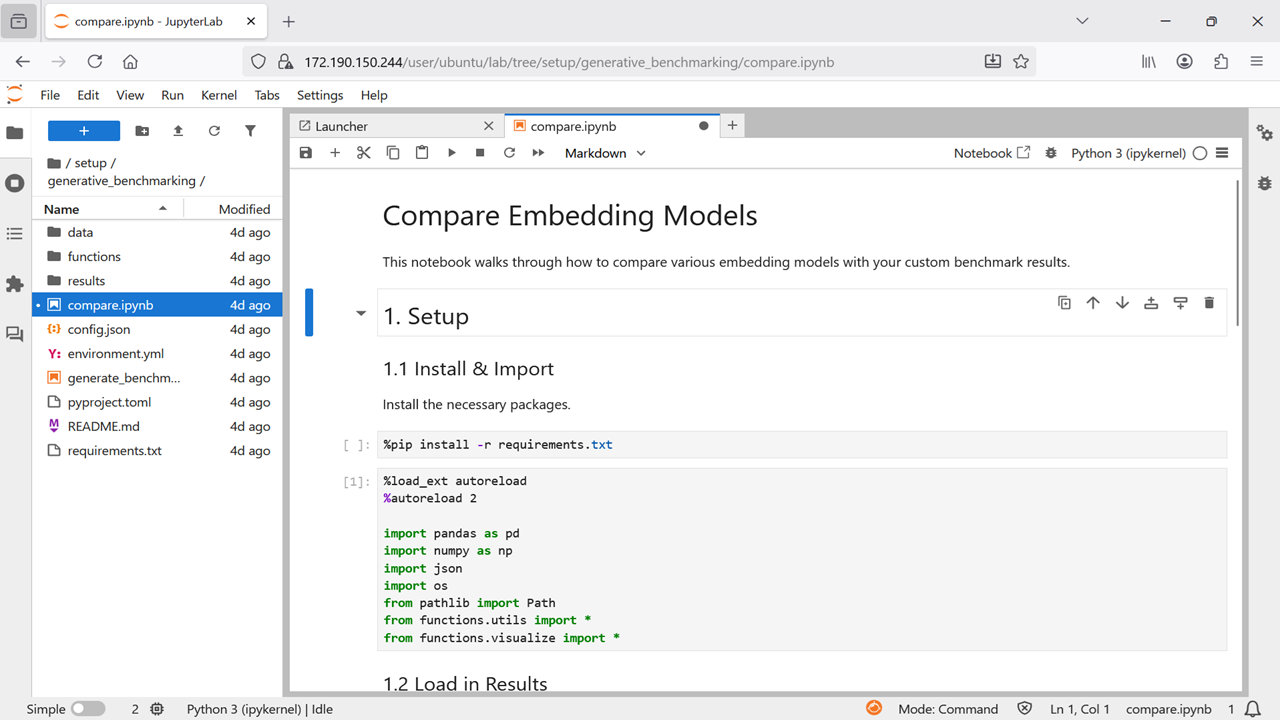
Generative Benchmarking Sample App
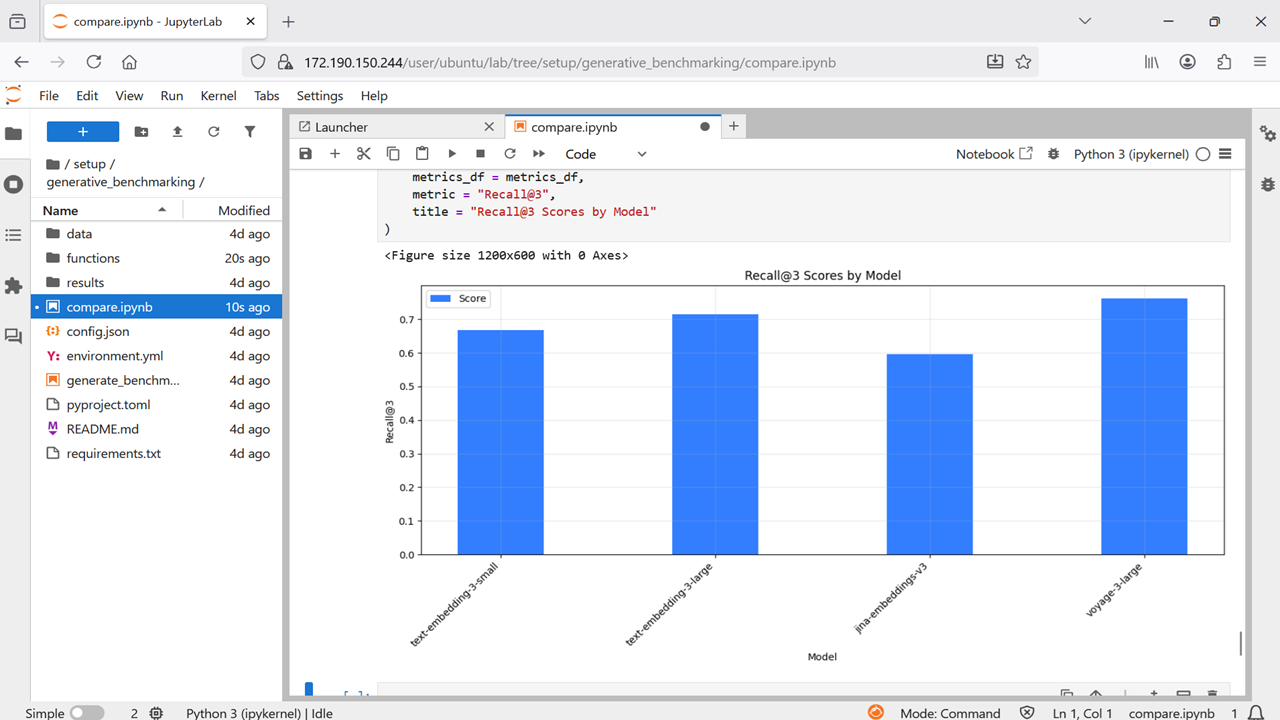
To demonstrate real-world use cases, this VM includes a Generative AI Benchmarking App.
The app showcases how ChromaDB can power retrieval-enhanced generation and embedding similarity workflows. It benchmarks retrieval precision, response quality, and semantic matching between query and corpus embeddings.
Disclaimer: Other trademarks and trade names may be used in this document to refer to either the entities claiming the marks and/or names or their products and are the property of their respective owners. We disclaim proprietary interest in the marks and names of others.
Preview
5 images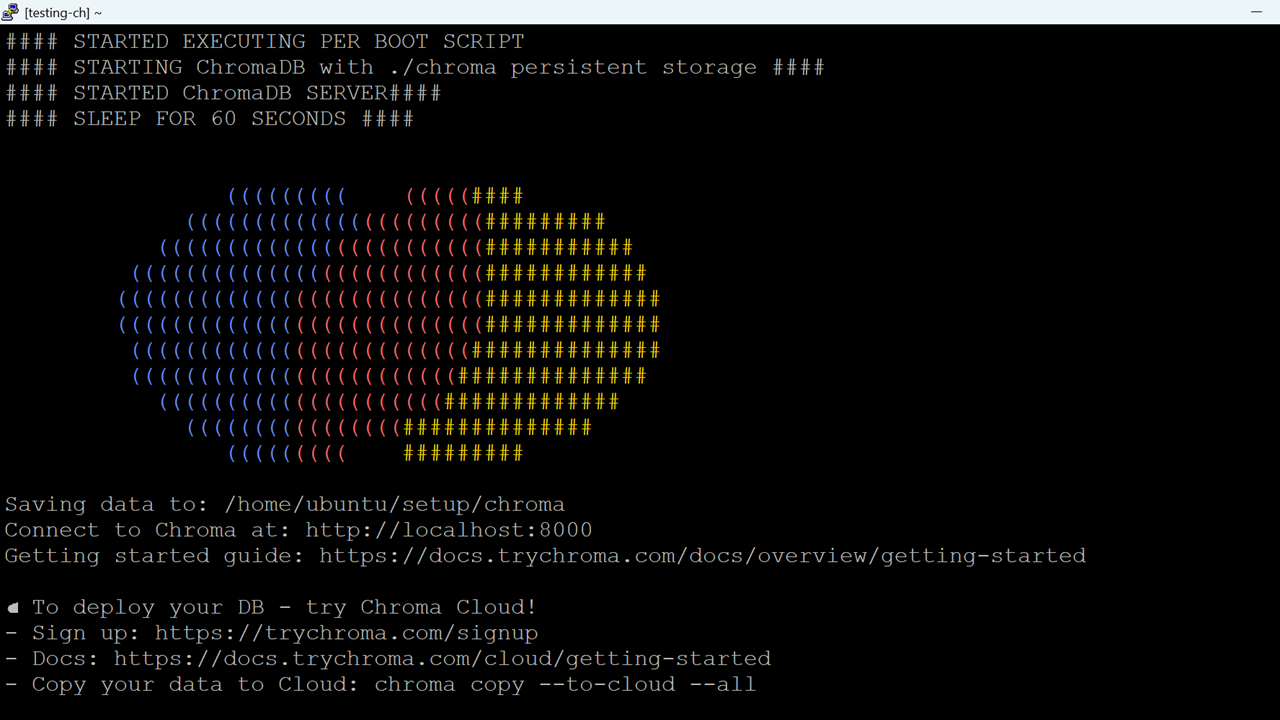
Agent build and provenance
See the full provenance
The layer-by-layer build, the evidence behind each claim, the risk basis and the cross-marketplace links are open to any account. Some rows are disclosed, some the source leaves Unknown; a free account shows you which.
Compliance
- FedRAMPConfirmedNot listed90%, registry-checkedNo FedRAMP Marketplace entry matched this vendor's domain, checked 2026-08-27registry recordas observed 2026-08-27
Confirmed means matched to a public authoritative registry. Claimed means the vendor or its listing states it, not yet cross-checked. A framework not shown was not found in any source we hold, which is not evidence against it. Not listed means a scoped registry check found no match for this vendor's domain: a No is a scoped registry check, not a compliance judgment. Confidence bands: 95% domain-verified, 90% registry-checked, 80% self-attested, 70% weak signal. Self-attested items marked “vendor's site” are gathered from the vendor's own website and are not verified by us.
Vendor
External enrichment · as of 2026-08-29
Sources
Publisher resources
3 linksLinked repositories
Unknown means this listing does not publish a repository. It is not a statement that the code is closed, and a linked repository is not a claim that the publisher wrote it: the registry computes that relationship privately and does not publish it.
Evidence risk is the share of the build you cannot see before you deploy, not a security rating. Sign in to see the layer-by-layer basis for this band.