

CitiusTech AI RCM Denial Prediction
CitiusTech · Intelligence & Research
Certification per Microsoft Marketplace.
Evidence tier Source Confirmed · 7 captures on record
What the publisher says
As described on Microsoft Marketplace.
Solution Overview
AI-Led RCM Denial Prediction is an Azure-based solution that helps healthcare organizations identify preventable claim denials before submission. It analyzes structured 837 claim data, 835 remittance outcomes, historical denials, corrected resubmissions, and payer-specific trends to generate actionable denial intelligence.
Show the rest of the publisher’s description (38 more lines)
The solution uses LLM-assisted pattern discovery, statistical analysis, healthcare coding hierarchies, and Knowledge Graph-based probabilistic matching to detect denial risks across payer, CPT/HCPCS, ICD-10, modifier, provider, place-of-service, authorization, CARC, and RARC dimensions.
It enables explainable pre-submission prediction, recommends corrective actions, and supports continuous learning from new claims, denials, and paid outcomes.
What Makes This Solution Different
- LLM-Assisted Discovery, Graph-Based Prediction: LLMs help interpret denial patterns, while predictions are generated through weighted Knowledge Graph matching, historical denial probability, and confidence validation.
- Claim Lifecycle Intelligence: Uses 837 submissions, 835 responses, denied claims, corrected resubmissions, and paid outcomes to identify real denial triggers.
- Delta-Based Root Cause Analysis: Compares denied claims with corrected resubmissions to identify changes in codes, modifiers, diagnosis sequencing, authorization, charges, frequency codes, and place of service.
- Validated Pattern Intelligence: Patterns are scored using denial frequency, paid frequency, CARC specificity, recency, coverage, trend behavior, and sample strength.
- Healthcare-Aware Generalization: CPT, ICD-10, and modifier hierarchies help generalize patterns beyond individual codes for broader reuse.
- Grounded and Explainable Outcomes: Predictions are based on validated patterns, graph relationships, lineage, and statistical confidence checks, reducing reliance on unconstrained generative inference.Key Solution Highlights
- AI-driven denial pattern discovery from claim submissions, denials, resubmissions, and adjudication outcomes.
- Azure Blob-based batch ingestion of 837 files with automated processing and audit logging.
- Unified analytical dataset across 837 claim submissions and 835 adjudication responses.
- Feature engineering across demographics, eligibility, coding, charging, payer, provider, authorization, and place of service.
- Knowledge Graph repository with pattern lineage, versioning, temporal tracking, and metadata traceability.
- Weighted pattern matching using exact, partial, semantic, and no-match logic.
- Denial probability calculation using matching score, pattern probability, Top-K similar patterns, and weighted aggregation.
- Built-in validation for similarity confidence, statistical strength, pattern stability, and conflicting pattern signals.
- Actionable recommendations to support pre-submission corrections and denial prevention.
Target
Users
- Executive Stakeholders: CFO,
CRO, VP Revenue Cycle, VP Revenue Integrity, Director Revenue Operations.
- Operational Stakeholders:
Revenue Cycle Managers, Denial Management Teams, Medical Coding Specialists,
Billing Teams, Claims Operations Managers, Revenue Integrity Analysts.
- Technology Stakeholders: CIO,
Chief Digital Officer, Data & Analytics Teams, AI Leaders, Enterprise
Architects.
Business
Outcomes
- Significant reduction in
false-positive denial alerts through probability-based pattern validation.
- Improved prediction precision
through deterministic Knowledge Graph pattern matching.
- No hallucination risk in
production denial prediction.
- Improved first-pass claim
acceptance rates and clean claim rates.
Preview
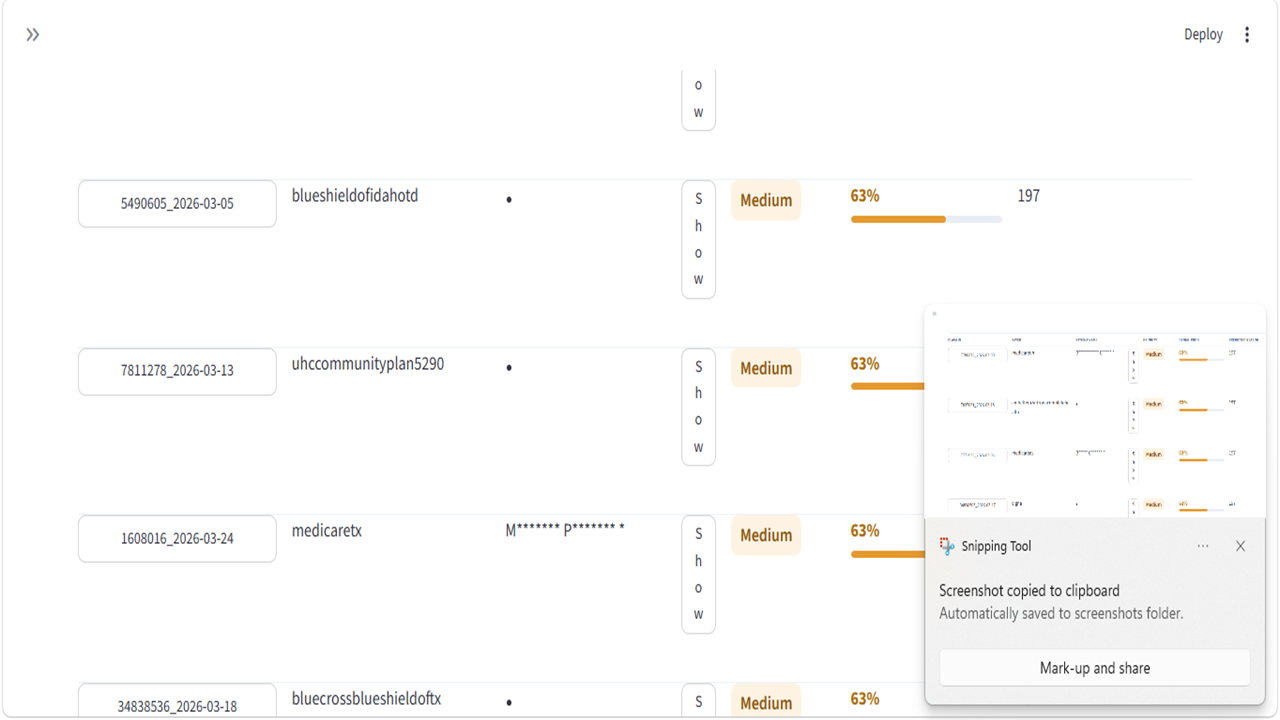
2 images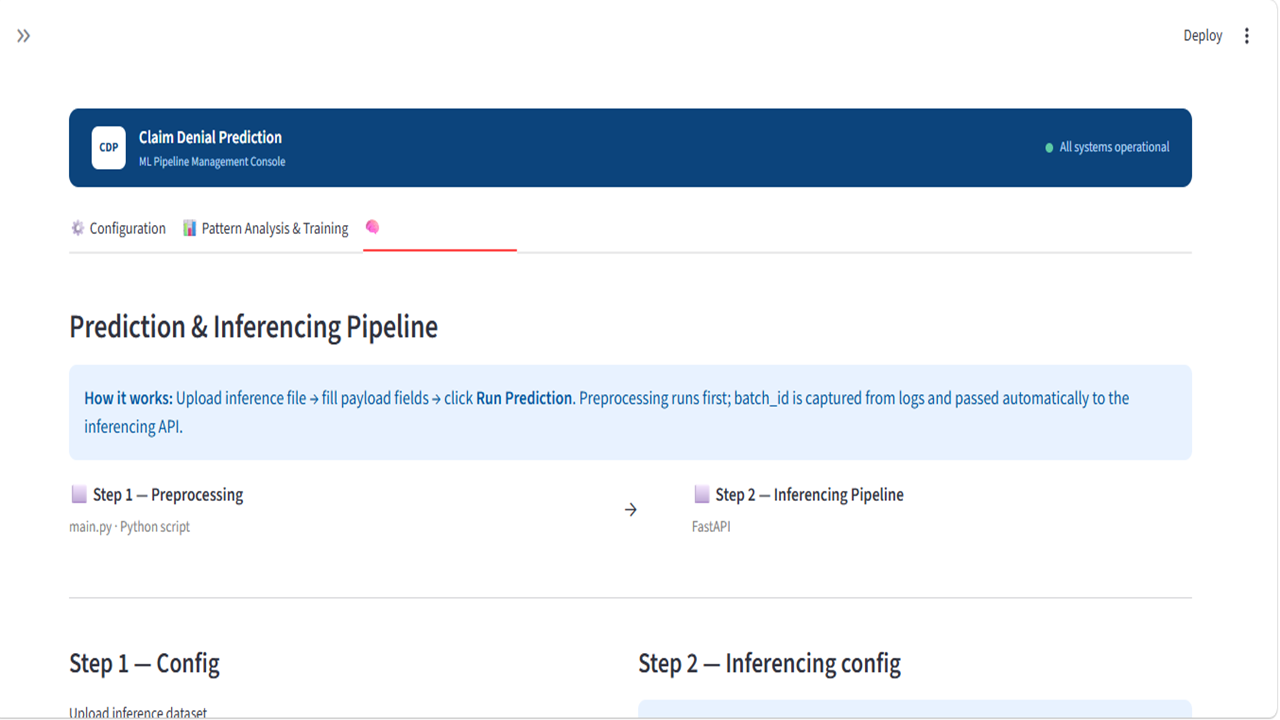
Agent build and provenance
See the full provenance
The layer-by-layer build, the evidence behind each claim, the risk basis and the cross-marketplace links are open to any account. Some rows are disclosed, some the source leaves Unknown; a free account shows you which.
Compliance
- FedRAMPConfirmedNot listed90%, registry-checkedNo FedRAMP Marketplace entry matched this vendor's domain, checked 2026-08-27registry recordas observed 2026-08-27
Confirmed means matched to a public authoritative registry. Claimed means the vendor or its listing states it, not yet cross-checked. A framework not shown was not found in any source we hold, which is not evidence against it. Not listed means a scoped registry check found no match for this vendor's domain: a No is a scoped registry check, not a compliance judgment. Confidence bands: 95% domain-verified, 90% registry-checked, 80% self-attested, 70% weak signal. Self-attested items marked “vendor's site” are gathered from the vendor's own website and are not verified by us.
Vendor
External enrichment · as of 2026-08-29
Sources
Publisher resources
1 linkLinked repositories
Unknown means this listing does not publish a repository. It is not a statement that the code is closed, and a linked repository is not a claim that the publisher wrote it: the registry computes that relationship privately and does not publish it.
Evidence risk is the share of the build you cannot see before you deploy, not a security rating. Sign in to see the layer-by-layer basis for this band.